If you spend at any time on building and construction websites, in employment offices, or even in Facebook tradie teams, you see the very same White Card questions over and over. Some of the responses people give are strong. Others are half-true or entirely incorrect, and they trigger brand-new employees a lot of unnecessary stress.
I have actually watched thousands of people endure the CPCCWHS1001 training course, prepare to work securely in the building market, and complete their first building induction card. I have actually additionally viewed a lot of them walk in stressed for no excellent reason: frightened about a "technique examination," persuaded they must memorize exact White Card solutions, or assuming they can just do a dodgy 20‑minute on-line test and be done.
This guide removes that up. It concentrates on real questions people inquire about the White Card course and examination, and it leans on just how it actually works on the ground across Australia, not simply what a government sales brochure says.
What the White Card really is (and what it is not)
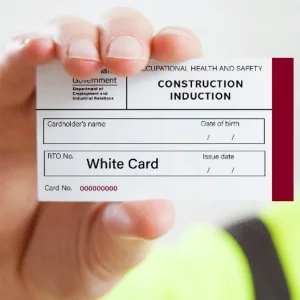
The White Card is the national construction induction card in Australia. It reveals you have actually finished the system of expertise CPCWHS1001 - Prepare to work securely in the building and construction sector (frequently written as CPCCWHS1001 in older materials).
It is not a licence to do a profession. It does not replace trade permits, dogging and rigging tickets, operating at elevations training, or a building and construction instruction. Think about it as your access ticket to building websites: proof that you comprehend the essentials of job health and safety in that environment.
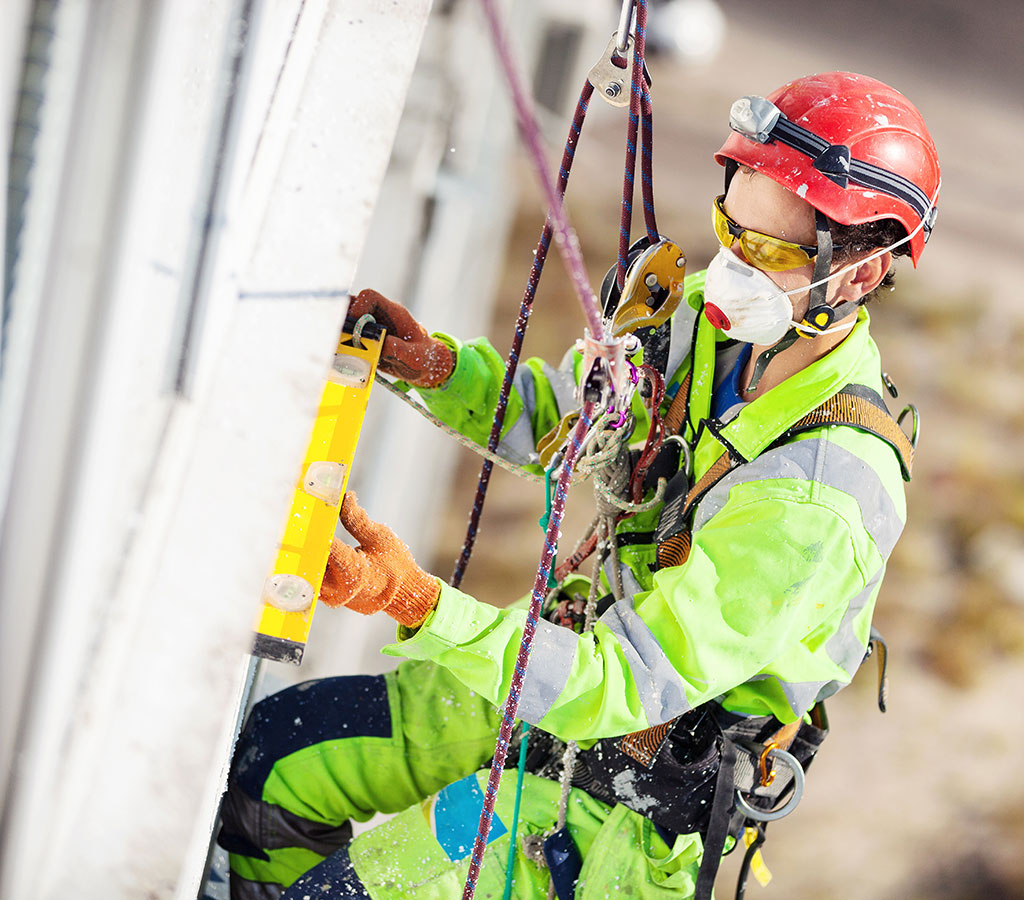
People obtain a White Card for numerous reasons, including:
- Labourer White Card to start as a whole building or demolition. Carpenters White Card, electrical contractors, plumbers, and painters that need site accessibility also if they currently have other tickets. Engineers, land surveyors, job managers, and site-based realty representatives who see sites regularly. Film set workers, delivery vehicle drivers, and others who enter energetic building and construction areas as part of their job.
If your job jobs place you on a building site in such a way that could subject you to threats, you almost certainly need a valid Australian White Card.
Myth 1: "The White Card course is difficult and packed with method inquiries"
This is possibly one of the most usual worry I hear, particularly from individuals who have actually refrained any official training in years or who had a hard time at school.
The truth is extremely different. The system CPCWHS1001 is designed for individuals that are entirely new to building. That includes school leavers, career changers, people with English as a second language, and workers with restricted analysis or writing skills. Registered training organisations recognize this, and good trainers structure the White Card course accordingly.
The inquiries in the analysis are not made to fool you. They are there to verify you can:
- Recognise basic construction risks, such as operating at elevations, electrical power, moving plant, silica dust, and asbestos on building and construction sites. Understand building site signs and what they require you to do. Follow construction emergency procedures, including that to report to and what activities to take. Use fundamental PPE on a construction site, such as hard hats, security boots, high‑vis garments, gloves, glasses, and hearing protection. Communicate clearly concerning security with managers and co‑workers.
In a face to face White Card course, the analysis jobs circulation naturally from the training. Instructors generally explain and talk about every subject that appears in the examination. If you pay practical attention, the majority of the "examination" will certainly seem like repeating what you have just spoken about.
People fail when they:
- Rush with without listening. Ignore the useful parts and try to treat it like a tick-and-flick quiz. Have language obstacles and do not request aid or clarification.
If you are worried, talk freely with the instructor at the start. A lot of us can readjust the method we clarify points, and some providers have LLN (language, proficiency, numeracy) support developed right into the course.

Myth 2: "I simply need the CPCCWHS1001 White Card responds to"
Searches for "cpccwhs1001 white card responses" and "white card test solutions" obtain a great deal white card perth course of website traffic, and you might see dodgy PDFs or "technique white card examination" websites guaranteeing the precise concerns and answers.
A few factors from the real life:
The White Card system is country wide backed, however private training organisations create their very own evaluations, as long as they fulfill the demands of CPCWHS1001. That indicates there is no solitary nationwide solution sheet you can memorise.
Even where example concerns look similar, fitness instructors frequently update wording, swap examples, or relocation between written, spoken, and practical demos. Any kind of rip off sheet you discover white card course port adelaide online goes to finest partial and outdated.
Most significantly, memorizing solutions without recognizing them defeats the factor. You do not require advanced concept, however you do need to recognise when silica dirt, asbestos, live electric components, manual handling, or operating at elevations develop real threat. You likewise require to recognize what to do in the minute, not simply on paper.
If you want to prepare, you are far better off:
- Reading a brief overview from a genuine RTO. Watching a few reliable security video clips regarding construction risks and PPE. Walking past a regional site and taking note of the construction site indicators, barricades, and PPE individuals are wearing.
That sort of preparation makes the training course uncomplicated and keeps you much safer once you actually step on site.
What the White Card course actually covers
Despite the advertising gloss, "White Card course web content" is fairly regular, because it is all constructed from the one nationwide device. Anticipate to cover subjects such as:
Basic WHS legislation and responsibilities. Who is responsible for safety and security on site, what "task of care" indicates, and where the White Card sits in the bigger WHS system.
Construction dangers. Operating at elevations, trenches and excavations, moving plant and trucks, website traffic control around sites, electrical energy, restricted areas, ladders and scaffolds, silica dirt and other dirt on building websites, asbestos on building sites, sound on building sites, dangerous materials, and warm tension in construction.
Personal protective devices. Hard hats, safety and security boots, eye and face protection, hearing security, handwear covers, high‑visibility vests, and often respirators depending on the program. You will usually manage or at least see actual PPE, not just pictures.
Communication and coverage. Just how to review and follow building and construction website signs, just how to report dangers and near misses, that to speak with on site, and exactly how WHS communication works in a normal crew.
Emergency action. Building and construction emergency procedures for fire, clinical emergencies, architectural failing, gas leaks, and other site incidents. Where assembly factors are, what alarms suggest, and what your duty is.
The instructor will certainly likewise usually link these subjects to other safety tickets and building licences in Australia, such as working at heights, dogging and rigging, traffic control, and plant operation, so you get a feeling of how your White Card matches a larger safety and security picture.
Face to face vs online: can I do the White Card online?
This is a location where misconceptions and half‑truths really attack, mainly since the policies have altered in time and vary by state or territory.
Historically, you could complete a white card course queensland White Card online from practically throughout Australia. After safety problems and some really poor-quality online courses, several regulatory authorities tightened the rules.
As at current technique:
Queensland and Western Australia still permit on the internet White Card training with approved RTOs, based on stringent identification checks and real‑time interaction requirements.
New South Wales, Victoria, South Australia, Tasmania, and the ACT generally need face to face or live digital distribution (with the fitness instructor able to see and speak to you), not self‑paced click‑through modules.
The Northern Area White Card training is often provided one-on-one in Darwin and regional centres, but there are additionally NT White Card online setups through details RTOs, subject to NT policies and the 60‑day guideline about releasing cards after you total training.
Regulators update their demands, and RTOs adapt their distribution modes, so constantly talk to the training organisation and your state's WHS regulator instead of relying upon an old Facebook comment.
If you are asking, "Can I do White Card online?" the most safe response is: often indeed, yet it depends where you live, where you intend to work, and how your picked RTO delivers CPCCWHS1001.
How long does a White Card course take and what does it cost?
For a basic classroom program, such as in Adelaide, Darwin, Hobart, Perth, Brisbane, Sydney, Melbourne, and regional hubs like Morphett Vale or Salisbury, you need to allow a complete day. Many "How much time is White Card course?" responses price estimate concerning 6 to 8 hours consisting of breaks and assessment.
Shorter training courses are possible where component of the training is pre‑work or recognition, but beware of anyone encouraging you a White Card in under an hour. Regulatory authorities view that closely.
Costs vary by service provider and area, but a sensible range for a White Card course in Australia is typically between $80 and $160 for people. Team white card training and business White Card programs may be bargained at a various rate, depending on numbers, delivery on site, and whether the provider is taking a trip to your workplace.
If a course looks suspiciously low-cost, ask questions concerning:
- Delivery mode and compliance with your state's rules. Whether the price includes the real physical card or simply the statement of attainment. Turnaround time: how long your card or certification will certainly take to be issued.
What do I need prior to I look for a White Card?
You do not need trade experience, and you do not require to be presently used in building. You do need a few admin items sorted when you make an application for a White Card course.
Here is a basic pre‑course list that works anywhere in Australia:
Create a USI (Distinct Trainee Identifier) if you do not currently have one. You can do this online via the main USI web site, making use of ID such as a chauffeur permit, Medicare card, or passport. No USI usually implies no statement of attainment and no legitimate White Card. Collect legitimate image ID for enrolment and on the day. The majority of RTOs approve a chauffeur permit, ticket, or proof-of-age card. Some also ask for extra files for identity verification, specifically for on the internet courses. Check language, proficiency, and numeracy demands. If English is not your mother tongue or you have problem reading, talk to the RTO ahead of time. Lots of can supply assistance or recommend a better distribution method. Confirm the distribution approach meets your state regulations. If you are in New South Wales, Victoria, South Australia, or Tasmania, be wary of self‑paced online training courses that assert "nationwide authorization." Speak to the RTO concerning just how they deliver CPCCWHS1001 in your state. Ask regarding what to cause the day. Some programs supply PPE for the practical element, others expect you to bring shut footwear or certain products. It is much easier to validate this ahead of time than to be turned away.Once you have those action in location, you prepare to enlist and finish the White Card training.
What does the White Card analysis appearance like?
The evaluation is designed to reveal you can apply your knowledge, not just repeat phrases. Layouts differ between RTOs, however a regular White Card analysis mixes:
Written or multiple‑choice concerns. These cover definitions, duties, hazard acknowledgment, PPE, site signage, and emergency actions. Lots of instructors will certainly check out inquiries aloud or clarify phrasing if you ask.
Verbal questions. For individuals with lower proficiency, some trainers assess vocally, asking you to discuss in your own words exactly how you would react in a situation.
Practical jobs. Demonstrating how to place on and adjust PPE, how to recognise risky scaffolding or ladders in images, or how to respond if you see subjected online circuitry or unprotected edges.
Scenario conversations. Tiny study like "You see harmed electric cables near a pool" or "You feel dizzy while cutting concrete and notification dust wandering" and you describe what you would certainly do, that you would certainly speak with, and why.
The key is uniformity with the program content. By the time you sit the analysis, you should currently have actually gone over every scenario key in course. If something really feels totally strange, that is a sign to ask more inquiries prior to you get to the assessment stage.
Does the White Card expire?
This one triggers constant confusion, particularly with individuals moving interstate.
The nationwide setting is that a White Card does not have a dealt with expiration date like a chauffeur licence. As soon as you hold CPCWHS1001, your building and construction induction card is generally valid throughout Australia.
However, most state and area regulatory authorities add a vital problem: if you have actually not worked in building and construction for a duration (frequently 2 years), you might be called for to re‑do the basic construction induction training prior to returning to site. New South Wales White Card expiration rules, for instance, focus on whether you have actually been "non-active" in construction work for 2 successive years.
Practically, this suggests:
If you maintain working in building and construction or on a regular basis check out websites, your White Card remains current.
If you left the sector for several years and can not demonstrate recent building job, a site or company might insist on a refresher course or complete re-training, even if your plastic card still looks fine.
If you shed your card, you can generally set up a White Card replacement with the RTO that released it or by means of your state regulator. Substitute procedures differ by state, such as White Card replacement in SA or substitute White Card in WA, however you normally do not need to retrain if your underlying system of expertise is still valid and you have not been away from construction also long.
It is worth noting that some older state‑based cards, like the old blue or red cards, have been phased out or changed by the nationwide White Card. If your card is very old, call the regulatory authority or an RTO and ask whether it is still accepted.
Do specific workers actually require a White Card?
Another persistent myth is that only "genuine tradies" need a White Card. In practice, the regulation concentrates on what you do on site, not your job title.
Here is just how it plays out:
Carpenters, electricians, plumbers, painters. Whether you are a pupil or licensed, if you perform building and construction service website, you need a construction White Card.
Labourers and basic hands. If you are dumping products, assisting trades, sweeping, or doing basic demolition, you need a labourer White Card.
Engineers, property surveyors, project supervisors. If you establish foot on energetic building and construction or civil websites as component of your work, you ought to hold a valid White Card. Lots of business White Card programs exist specifically for these "non‑tradie" professionals.
Delivery motorists and realty agents. If you go into the actual construction zone, or step out of the taxi into areas with plant motion, overhanging work, or excavations, you must hold a White Card. Some firms currently define a distribution driver White Card as component of their contractor onboarding.
Mining and civil works. Many mining operations accept the standard Australian White Card as a base need, then include site‑specific inductions and mining safety and security programs on top.
If you are not sure, think of discussing to a regulator why you assumed you did not need training prior to strolling under cranes, past open trenches, or through silica dust. If that discussion feels uncomfortable, get the White Card.
State distinctions and neighborhood examples
The underlying CPCWHS1001 course is nationwide, however training places and processes differ, and it is useful to understand local patterns.
South Australia. Adelaide White Card training courses run frequently in the CBD and commercial hubs like Port Adelaide, Morphett Vale, and Salisbury. In person training is the standard, and lots of RTOs likewise offer group White Card training for building and construction companies and business clients. If you are new to construction in SA, you will locate plenty of White Card training Adelaide SA wide.
Northern Region. Darwin White Card training prevails, with RTOs servicing the city and local areas. NT White Card programs need to meet Northern Territory guidelines about identity monitoring and the 60‑day policy for providing cards. Given the climate, fitness instructors typically invest additional time on warmth stress and anxiety in building and remote job risks.
Tasmania. Hobart White Card courses are usually supplied face to face through local RTOs. Regional areas additionally hold training where there suffices demand. Noise on building websites, hand-operated handling, and small staff communication have a tendency to include strongly in Tasmanian training as a result of the smaller sized scale of lots of projects.
Western Australia and Queensland. Perth White Card and Brisbane or Gold Coastline White Card programs are offered both one-on-one and online (through certified service providers). Due to the fact that on the internet alternatives are still allowed below, make sure you choose a reliable RTO that follows regulatory authority guidelines and does not simply rush you through a multiple‑choice quiz without actual learning.
Victoria and New South Wales. Vic White Card and NSW White Card programs are managed more tightly, with a solid emphasis on face to face or live‑virtual shipment. If you see "White Card online" advertised in these states, read the small print and verify it fulfills regulatory authority needs. White Card Victoria distribution time for the physical card can differ, yet RTOs typically release a statement of achievement promptly so you can start job while waiting for the plastic.
Despite these distinctions, once you hold a genuine building and construction induction card, you can generally work across state borders, based on the lack of exercise regulations discussed earlier.
What takes place after you pass?
After you complete the White Card course and pass the analysis, you get a declaration of achievement for CPCWHS1001 - Prepare to work securely in the building sector. Depending on the state and RTO, you may receive:
- A short-term statement or certificate you can reveal employers straight away. A plastic White Card sent by mail to your address within a set duration, usually 1 to 4 weeks. Instructions on just how to validate your White Card or inspect the card online if the state provides that solution (for instance, some White Card WA check devices or employer confirmation websites).
Keep your declaration of achievement and card information someplace safe. If you ever need a White Card replacement, your RTO or regulator will use those records. If you do not bear in mind "just how to find White Card number" later, the card itself lugs it, and your training organisation's documents can normally confirm it.
From there, you satisfy one of the core building and construction instruction demands and access problems for many construction tasks. Employers may after that add their very own website inductions, company safety components, and better units such as working at elevations, restricted area, or plant operation.
Final thoughts: focus on understanding, not shortcuts
Most myths regarding the White Card course and test come from a wish to tick a box as fast as possible. That is easy to understand when you are keen to start earning under the Structure and Construction Award 2020 or step into a new role. The danger is that shortcut reasoning leads to poor-quality training, void cards, and harmful habits.
The truth is a lot more straightforward, and a whole lot less terrifying:
- The White Card course is built for newcomers to construction. The test is not regarding memorising secret CPCCWHS1001 White Card solutions, it has to do with acknowledging dangers and recognizing what to do. You can finish it in a day, at an affordable expense, via a reputable RTO that recognizes your state's rules. Once you have it, you hold a national building and construction induction card that opens the door to a wide range of website functions, from labourer to designer to project manager.
Treat the day as a financial investment as opposed to a difficulty. Ask inquiries, connect the examples to actual work, and take note of the parts on hazards like silica dirt, asbestos, electricity, and plant tools safety and security in construction. Those are things that keep you, and individuals around you, to life and gaining for the lengthy term.